Building the intelligence system for the next era of AI: Why we've invested in Callosum
Every leap in AI capability comes with a growing bill: more compute, more energy, more infrastructure. That’s because today’s AI stack has been built around one simple assumption: one model, running on one type of chip. That assumption is now breaking. That’s why we’ve invested in Callosum.
The Problem
Frontier models offer extraordinary capabilities, but the cost of running them has grown unsustainably. At the physical level, the one-chip-fits-all approach has created structural risks for every buyer, developer and nation state relying on AI infrastructure.
Danyal Akarca, Cco-founder & CEO ofCallosum:
“The industry has been betting that one model or one kind of chip will rule them all. But nature shows us the opposite. Intelligence is collective and will emerge from many specialised systems working together. We believe AI needs a new axis of scaling, where many models and hardware co-evolve as a single system. That’s how we build AI that is not only more capable, but dramatically faster, more affordable and far more energy-efficient, opening the door to applications that were not viable before.”
The Solution
Callosum has built the software layer that co-optimises AI models and chips, orchestrating each workload across the hardware best suited to run it — removing the engineering complexity of achieving frontier performance.
Callosum’s opportunity stems from a structural shift in the AI industry. Spending is rapidly moving from training ever-larger foundation models towards better inference. At the same time, a Cambrian explosion of specialised processors — from wafer-scale to analog and optical computing — is challenging the era of single, monolithic chips.
At the heart of Callosum’s thesis is a reframing of the industry’s basic unit of value: the token. Rather than simply making tokens cheaper through brute force, Callosum’s heterogeneous approach makes each token worth more — directing every unit of computation to the model and hardware where it can produce the most useful intelligence for every dollar spent.
Jascha Achterberg, Co-founder of Callosum:
“It’s about building systems that can harness the best intelligence wherever it exists. By running AI across many different chips and architectures, we create systems that are more resilient, more efficient and less dependent on any one company or country. That’s how you build AI infrastructure that can endure.”
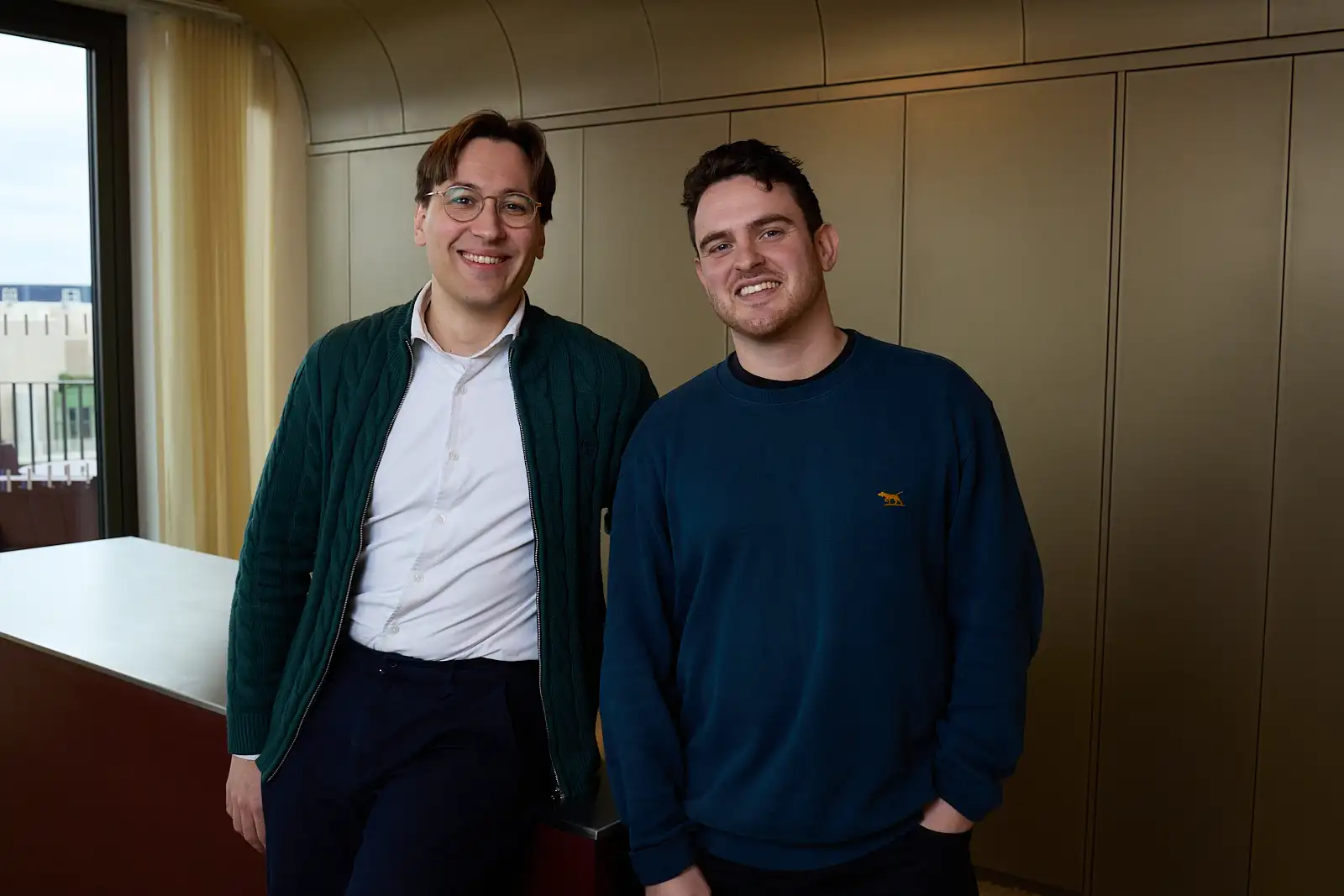
The founders, Danyal Akarca and Jascha Achterberg, met while earning their PhDs at Cambridge, where their research examined how the brain achieves intelligence — not by replicating one type of neuron billions of times, but by combining specialised circuits. They believe AI systems will follow the same pattern: many models, interacting collectively, across diverse computing substrates.
The Round
The $100 million seed round — led by Atomico, with participation from Plural, DCVC, UK Sovereign AI, Norrsken VC and other world-leading investors — is one of the largest seed rounds ever raised in Europe. It comes less than six months after Callosum emerged from stealth with a $10.25 million pre-seed round. The funding will be used to scale the technology, deepen partnerships across silicon ecosystems, and expand the team.
What’s Next
Alongside the raise, Callosum is launching the first software layer built for heterogeneous intelligence: an orchestration platform that decomposes AI workloads and distributes each task to the model and processor best suited to execute it. The result is inference tailored to the task at hand — unlocking gains in cost, speed and capability that no single model or chip can achieve alone.
As the orchestrator of intelligent systems, Callosum serves three groups shaping the next phase of AI:
Enterprises consuming tailored inference, who need frontier AI capability at cost and latency points currently unobtainable.
Next-generation clouds and hyperscalers serving tailored inference, who need to orchestrate diverse fleets of models and chips.
Sovereign compute programmes, which benefit from more resilient, heterogeneous AI capacity.
The company is launching its tailored inference through a first product: a family of APIs that lets developers adopt frontier AI hardware without rewriting their applications — collapsing what can take months of engineering work into a single integration.
Callosum’s tailored-inference platform is already in production. On complex agentic workloads in financial services, the platform ran 4x faster, cut compute costs by 70%, and improved task success rates by 10% compared with the same workloads on a single frontier model running on conventional GPU infrastructure.
These results are part of Callosum’s partnership with Cerebras, the US chipmaker whose wafer-scale processors are among the fastest available for AI inference. Cerebras has partnered with Callosum around a shared bet on this new infrastructure paradigm.
We couldn’t be more excited to support Danyal, Jascha, and the entire Callosum team as they turn one of AI’s biggest costs into one of its greatest strengths.
Curious to learn more? Visit their website.
Latest news, insight drops, event recaps, and announcements.
.webp)
.webp)